
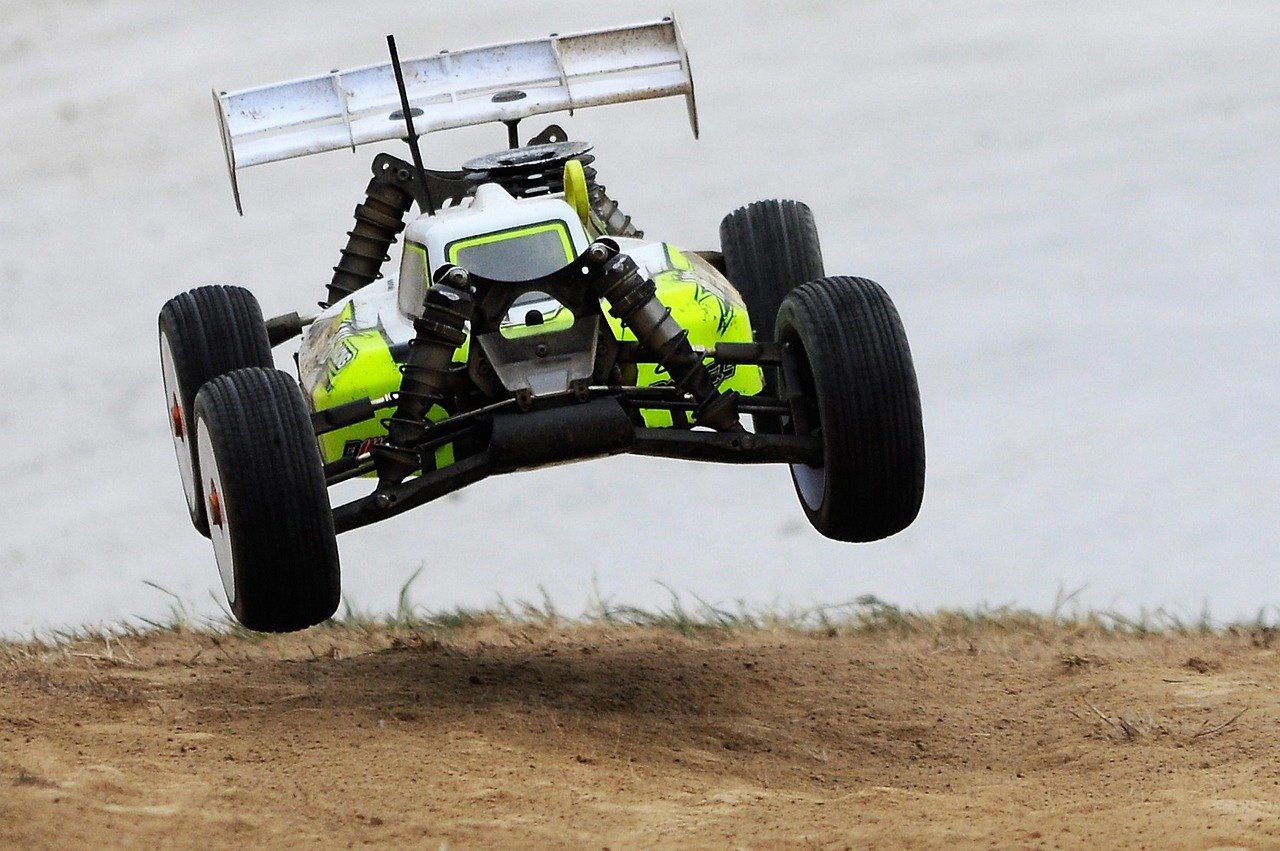
RC cars for beginners come in many shapes, sizes, and price ranges, which makes the first purchase confusing. This guide covers what RC cars are, which types suit new drivers, and how to choose, equip, and maintain your first vehicle.
What Are RC Cars?
An RC car is a model vehicle driven wirelessly with a handheld radio transmitter. The transmitter sends signals to a receiver inside the car, which tells the motor how fast to spin and the steering servo where to turn.
Main components:
- Tires and suspension: provide grip and absorb bumps
- Chassis: the frame that holds everything together
- Motor: powers the wheels (electric or nitro)
- Battery: supplies power to the motor and electronics
- ESC (electronic speed controller): regulates motor speed
- Servo: controls steering
- Receiver and transmitter: the wireless link between you and the car
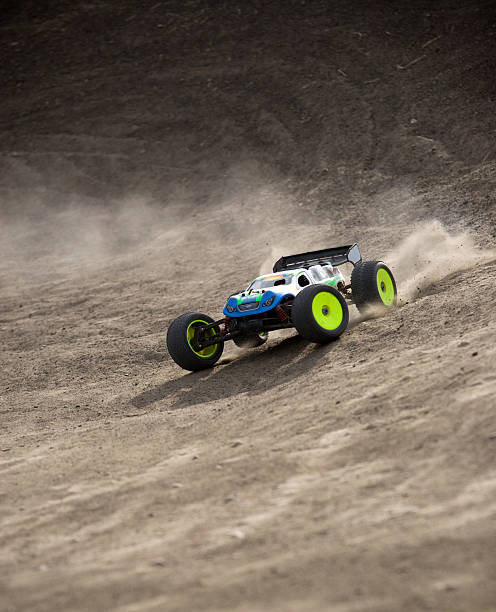
Toy-Grade vs. Hobby-Grade RC Cars
| Feature | Toy-Grade | Hobby-Grade |
| Price | Low | Moderate to high |
| Speed control | Usually on/off | Proportional (smooth) |
| Repairability | Rarely repairable | Fully repairable |
| Replacement parts | Seldom available | Widely available |
| Upgrades | Not possible | Motors, batteries, tires, and more |
| Durability | Low | High |
Toy-grade cars suit young children and casual play. Hobby-grade cars are the better choice for anyone who wants to learn, upgrade, and keep driving for years.
What Types of RC Cars Are Available for Beginners?
The most common beginner RC cars are on-road cars, trucks, crawlers, drift cars, buggies, and tracked vehicles. Each is built for a different surface and driving style.
- On-road RC cars: built for smooth pavement and high speed. They need open, flat space.
- RC trucks: tall, rugged, and stable on grass, dirt, and gravel. They are the most versatile all-rounders.
- RC crawlers: slow, precise vehicles built to climb rocks and obstacles. They reward patience rather than speed.
- RC drift cars: low-grip cars made for sliding around corners on smooth surfaces.
- RC buggies: lightweight and fast off-road cars with excellent handling.
- Tracked RC vehicles: tank-style vehicles that move on continuous tracks instead of wheels.
For most newcomers, trucks and buggies are the easiest of the beginner RC cars to handle, because they forgive mistakes and work on many surfaces.
What Are Good RC Cars for Beginners?
Good RC cars for beginners are durable, easy to control, moderately fast, and backed by readily available spare parts. Check these factors before buying:
- Durability: look for flexible plastic composite parts that survive crashes.
- Ease of control: choose a stable vehicle with a throttle that doesn’t launch it out of your hands.
- Speed: 15 to 25 mph is plenty to learn on. Faster cars are harder to control.
- Vehicle size: mid-size cars handle rough ground better than tiny ones, and they are easier to see.
- Terrain: match the car to where you’ll drive it, whether backyard, park, or pavement.
- Maintenance: simple designs are easier to clean and repair.
- Replacement parts: good rc cars come from brands with plentiful, affordable parts. Check this before you buy.
- Budget: a solid entry-level hobby-grade car often costs more than a toy, but it lasts far longer.
What Are Good RC Trucks for Beginners?
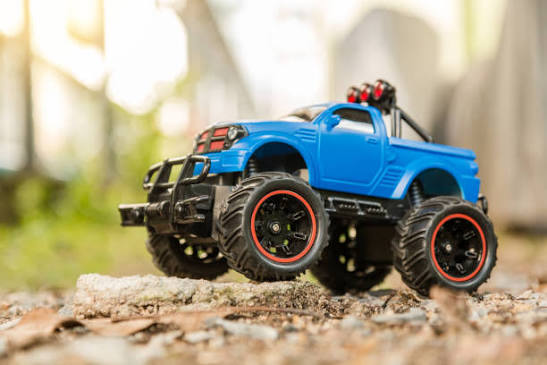
Good RC trucks for beginners are durable, stable, off-road capable, and simple to repair. That is why trucks are the most popular starting point in the hobby.
Why trucks suit beginners:
- High ground clearance handles grass, dirt, and gravel
- Large tires and long-travel suspension absorb rough landings
- Wide, stable stance reduces rollovers
- Parts are inexpensive and easy to find
2WD vs. 4WD:
| 2WD | 4WD | |
| Cost | Lower | Higher |
| Maintenance | Simpler | More parts to maintain |
| Traction | Good on dry ground | Better on loose or wet terrain |
| Learning curve | Teaches throttle control | Easier to keep straight |
Common truck types: short course trucks (low and stable), monster trucks (huge tires, great for bumps), and stadium trucks (fast and agile).
Maintenance note: trucks pick up dirt and moisture, so plan to clean them after every off-road run. If you want a rugged vehicle for outdoor driving, one of the good rc trucks for beginners is likely the right first pick.
What Is an RC Car With Tracks?
An RC car with tracks is a remote-controlled vehicle that moves on continuous rubber or plastic belts instead of wheels. Think of a miniature tank or bulldozer.
How tracks differ from wheels: tracks spread the vehicle’s weight over a larger surface area, so it keeps grip on loose or soft ground. Steering usually works by running one track faster than the other, which lets the vehicle pivot in place.
Where an RC car with tracks works best:
- Sand and loose gravel
- Mud and wet grass
- Snow
- Uneven backyard terrain
Advantages:
- Excellent traction on soft surfaces
- Strong climbing ability
- Stable and easy to control at low speed
Limitations:
- Slower than wheeled cars
- More moving parts to clean and maintain
- Less efficient on smooth pavement
Types of tracked RC vehicles: tank-style models, tracked crawlers, and half-track vehicles that combine front wheels with rear tracks. An RC car with tracks is ideal if you want slow, steady, all-terrain fun rather than top speed.
How Do You Choose the Right RC Car for Beginners?
To choose the right RC car for beginners, match the vehicle to your driving space, then check type, scale, drivetrain, power, durability, parts, and budget. Work through these steps in order:
- Choose the driving environment: backyard, park, street, or indoors?
- Decide on the vehicle type: truck, buggy, crawler, drift car, or tracked vehicle.
- Select an appropriate scale: 1/10 is a common, versatile size.
- Consider 2WD or 4WD: 2WD is cheaper and simpler. 4WD offers more traction.
- Choose the motor type: brushed motors are cheaper and gentler for learning. Brushless motors are faster and longer lasting but cost more.
- Consider the battery: NiMH batteries are safer and cheaper. LiPo batteries deliver more power but need careful handling.
- Check durability: look for tough chassis materials and protective bumpers.
- Consider replacement parts: pick a brand with parts available online and locally.
- Set a realistic budget: include a charger, spare batteries, and a few spare parts.
What RC Car Scale Is Best for Beginners?
1/10 scale is the best all-round size for most beginners. Scale is the ratio between the model and a real vehicle, so a 1/10 car is one-tenth the size of the real thing.
| Scale | Size | Best For |
|---|---|---|
| 1/24 – 1/18 | Small | Indoor driving, tight spaces |
| 1/16 – 1/12 | Compact | Small yards, mixed use |
| 1/10 | Medium | Outdoor driving, widest parts selection |
| 1/8 and larger | Large | Open fields, experienced drivers |
Small vs. large: small cars are cheaper and fit indoors but struggle on rough ground. Large cars handle obstacles better but are harder to transport and cost more to repair.
Consider your driving space and maintenance: a small apartment suits a compact car, while a large yard or park suits a 1/10 truck. Larger scales also mean larger, pricier replacement parts.
Should Beginners Choose an RTR RC Car or an RC Kit?
Most beginners should choose an RTR (Ready-to-Run) car, because it arrives assembled and includes nearly everything needed to drive. An RC kit must be built from parts, and the electronics are often sold separately.
| RTR | Kit | |
| Assembly | None or minimal | Full build required |
| Included electronics | Usually yes | Often no |
| Time to first drive | Minutes | Hours or days |
| Learning about mechanics | Limited at first | Excellent |
| Customization | Upgrade later | Choose every part |
| Best for | Most new drivers | Builders and tinkerers |
Choose RTR if you want to start driving quickly. Choose a kit if you enjoy building and want to understand how every part works.
What Do Beginners Need to Start With an RC Car?
To start with an RC car, you need the vehicle, a transmitter, a battery, and a charger, plus a few spare parts and basic tools. Use this checklist:
- RC vehicle: the car, truck, or tracked model you chose
- Radio transmitter: usually included with RTR models
- Battery: ideally a spare as well, so you can keep driving while one charges
- Charger: one that matches your battery type
- Spare parts: extra tires, suspension arms, and screws
- Basic tools: hex drivers and a small screwdriver set
- Safety and maintenance equipment: a soft brush, cleaning cloth, and a fireproof bag or container for charging LiPo batterie
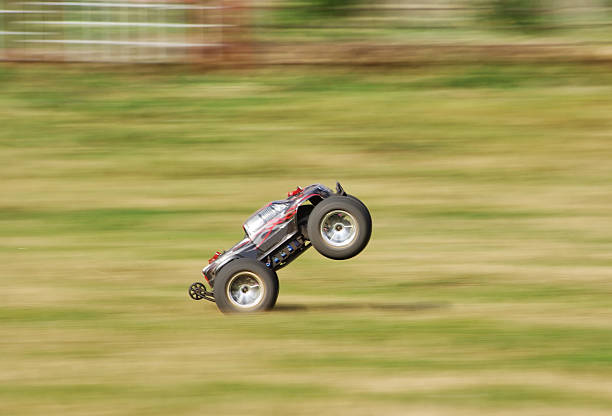
How Do Beginners Maintain an RC Car?
Beginners should clean the car after each run, care for the battery, and inspect tires, screws, and moving parts regularly. Good habits keep the car fast and reliable.
- Cleaning: brush off dirt and dry the car after every run, especially after wet driving.
- Battery care: never overcharge or fully drain it. Let it cool before charging.
- Tire inspection: check for wear, tears, or loose glue between tire and wheel.
- Checking screws: vibration loosens screws, so tighten them regularly.
- Motor and drivetrain maintenance: keep gears clean, remove debris, and watch for unusual noise or heat.
- Storage: keep the car dry and the battery at a safe storage charge, away from heat.
- Replacement parts: swap worn or broken parts early before they cause bigger damage.
Conclusion
Starting in the RC hobby is easier when you know what to look for. The best rc cars for beginners are hobby-grade, durable, moderately fast, and supported by a good parts supply. Trucks are the safest bet for outdoor driving, and one of the good rc trucks for beginners will handle most terrain. If you want something different, an RC car with tracks is excellent on sand, mud, and snow. Pick a 1/10 scale RTR model, buy a spare battery, and keep up with basic maintenance, and your first car will give you years of fun.