The best RC car for a beginner is durable, easy to control, affordable to maintain, and backed by readily available replacement parts. Your first model will take some crashes, so the right choice matches your driving space, budget, and how much tinkering you want to do. This guide covers each decision step by step.
What Is the Best RC Car for Beginners?
The best RC car for beginners is a durable, ready-to-run, hobby-grade model with moderate speed, simple controls, and easy access to affordable spare parts. It should forgive mistakes and keep you driving rather than repairing.
- Durability: Beginner cars crash often. Flexible plastic chassis, sturdy bumpers, and shock-absorbing suspension help a car survive hard landings and collisions.
- Ease of control: A beginner-friendly car has manageable speed, responsive steering, and a simple two-channel transmitter (one control for steering, one for throttle). Some models include a low-speed mode.
- Maintenance: Easy-to-reach parts and simple cleaning make upkeep less intimidating. Look for cars with accessible screws, standard tools, and clear manuals.
- Cost: A good starter model usually costs less than a high-performance racer. Remember to budget for extras such as spare batteries and a charger.
- Availability of replacement parts: Cars from established brands have widely stocked parts like arms, gears, and tires, so a broken component is a quick fix.
What Types of RC Cars Are Best for Beginners?
Off-road RC trucks and buggies are generally the best type for beginners because they handle rough surfaces, tolerate crashes, and can be driven almost anywhere. On-road cars and drift cars suit smooth surfaces and more specific interests.
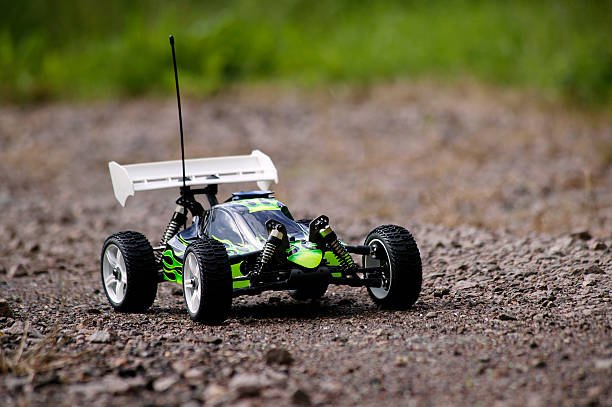
- RC cars (buggies and on-road cars): Buggies are versatile and quick, while on-road models are fast and precise but need smooth pavement. Beginners often find buggies easier because they can drive on grass, dirt, and pavement.
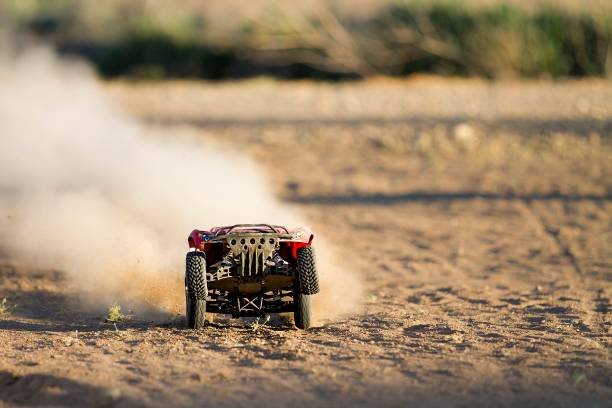
- RC trucks: Higher ground clearance and larger tires make trucks stable and forgiving, which is why they’re a common first choice.
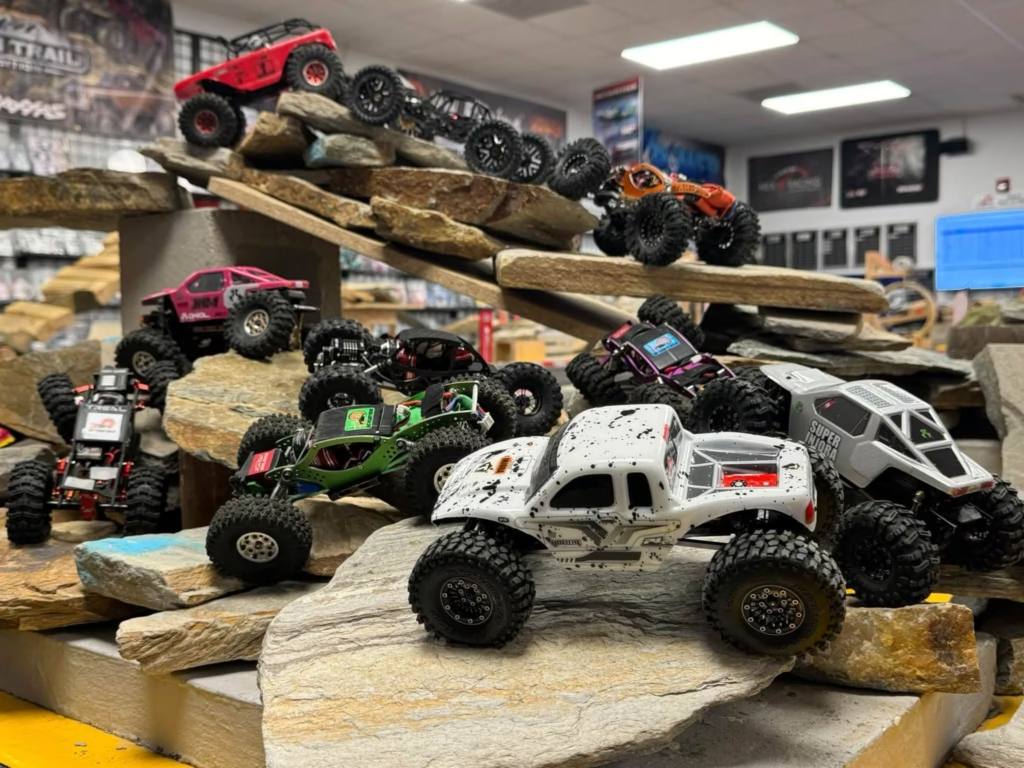
- RC crawlers: These are built for slow, technical climbing over rocks and obstacles. They’re low-speed and relaxing, ideal for patient drivers and small spaces.
- RC drift cars: Drift cars use special tires to slide through corners on smooth surfaces. They’re fun but require practice and a flat, clean area.
- On-road vs. off-road: On-road vehicles need smooth surfaces and reward precision. Off-road vehicles cope with uneven terrain and are the more flexible starting point.
What Is the Best RC Truck for Beginners?
The best RC truck for beginners is a ready-to-run 1/10-scale truck with durable construction, moderate speed, and strong parts support. Whether you choose 2WD or 4WD depends mainly on the terrain you’ll drive on.
- Why trucks are popular: Their tall suspension, big wheels, and robust bodies absorb bumps and jumps, so they stay upright and survive mistakes better than low-slung cars.
- 2WD vs. 4WD: 2WD trucks are simpler, lighter, and cheaper to maintain, which makes them good for learning throttle control. 4WD trucks offer better traction on loose dirt, grass, and gravel, but cost more and have more parts to maintain.
- Off-road capability: Look for good ground clearance, oil-filled shocks, and tires suited to your surface.
- Durability: Composite chassis and flexible suspension arms resist cracking. Metal parts are stronger but can bend or add weight.
- Terrain considerations: Smooth or hard surfaces suit 2WD. Mud, grass, sand, and loose gravel favor 4WD.
- Maintenance and replacement parts: After off-road runs, clean dirt from moving parts and check for loose screws. Choose a truck whose spare parts are easy to find.
Are RC Car Kits Good for Beginners?
Yes, RC car kits for beginners are a good option if you enjoy building and want to understand how your car works. They take longer to get running than ready-to-run models, but they teach valuable mechanical skills.
- What an RC car kit is: A kit is an unassembled car that you build yourself from individual components, following step-by-step instructions.
- What’s typically included: Most kits contain the chassis parts, suspension, gears, screws, and often the body and tires. Many do not include the transmitter, receiver, motor, battery, or charger, so check the box contents before buying.
- Assembly requirements: Expect several hours of building with basic hand tools such as hex drivers and pliers. Good kits provide illustrated manuals.
- Skills beginners can learn: Building teaches how steering, suspension, and drivetrains work, which makes later repairs and upgrades far easier.
- Kit vs. Ready-to-Run (RTR): An RTR car is driveable out of the box. A kit rewards you with knowledge and customization but delays your first drive.
- Who should choose a kit: Patient beginners who like hands-on projects, or anyone who wants to learn how an RC car works from the inside.
Are Hobby RC Cars Good for Beginners?
Yes, hobby-grade RC cars for beginners are an excellent choice because they’re repairable, upgradeable, and long-lasting. Beginner hobby RC cars cost more than toys but deliver far better performance and value over time.
- Hobby-grade vs. toy-grade: Toy-grade cars are inexpensive but typically have limited control, fixed components, and no replacement parts. Hobby-grade cars use proportional steering and throttle, and nearly every part can be replaced.
- Upgradeability: Hobby RC cars for beginners can be improved over time with stronger parts, better tires, or a faster motor as your skills grow.
- Replacement parts: Instead of discarding a broken car, you replace the damaged part and keep driving.
- Customization: Paint, bodies, wheels, and tuning options let you personalize your car.
- Long-term hobby value: A hobby-grade car can grow with you, supporting bashing, racing, crawling, or drifting, so it often proves cheaper than repeatedly replacing toys.
| Feature | Toy-Grade | Hobby-Grade |
| Price | Low | Moderate |
| Control | Basic (on/off) | Proportional |
| Replaceable parts | Rarely | Yes |
| Upgrades | No | Yes |
| Lifespan | Short | Long |
What Should Beginners Look for When Buying an RC Car?
Beginners should look at vehicle type, scale, drivetrain, motor, battery, speed, durability, parts availability, maintenance, and budget. Balancing these factors helps you pick a car that is fun to drive and affordable to keep running.
| Factor | What to Consider | Beginner Tip |
| RC car type | Truck, buggy, crawler, drift, or on-road | Trucks and buggies are the most versatile |
| Scale | Size relative to a real vehicle | 1/10 is a popular, well-supported choice |
| 2WD vs. 4WD | 2WD is simpler; 4WD has more traction | 2WD for learning; 4WD for loose terrain |
| Motor | Brushed is cheaper and easier to control; brushless is faster and lower maintenance | Brushed is fine to start |
| Battery type | NiMH is simple and durable; LiPo is more powerful but needs careful handling | NiMH is the easier starting point |
| Speed | Higher speed means harder control and harder crashes | Start moderate |
| Durability | Flexible, strong materials survive crashes | Prioritize it over top speed |
| Replacement parts | Widely available spares keep costs down | Stick with established brands |
| Maintenance | Cleaning, screw checks, and lubrication | Choose accessible designs |
| Budget | Include batteries, charger, and spare parts | Plan for extras |
Should Beginners Buy an RTR RC Car or an RC Kit?
Most beginners should buy an RTR RC car because it’s ready to drive quickly, while those who enjoy building and learning should choose a kit. Both can be great; the better option depends on your priorities.
- What RTR means: Ready-to-Run models arrive fully assembled with the electronics installed. Some still need batteries or a charger, so check what’s included.
- What an RC kit means: A kit comes in parts that you assemble yourself, and it often lets you choose your own electronics.
- Assembly requirements: RTR needs little or none. Kits require time, tools, and patience.
- Ease of use: RTR wins, since you can start driving almost immediately.
- Customization: Kits offer more freedom to select components, though RTR cars can be upgraded later.
- Learning experience: Building a kit teaches mechanics and makes future repairs easier.
- Which suits whom: RTR suits those who want to start driving right away. Kits suit hands-on builders who want a deeper understanding.
| RTR | Kit | |
| Time to first drive | Minutes | Hours |
| Skill needed | Minimal | Basic tools and patience |
| Customization | Upgrade later | Choose parts from the start |
| Learning value | Moderate | High |
What RC Car Scale Is Best for Beginners?
1/10 scale is generally the best RC car scale for beginners because it balances size, stability, durability, and parts availability. Smaller scales such as 1/18 and 1/24 suit indoor driving and tight spaces.
- What RC scale means: Scale is the car’s size relative to the real vehicle. A 1/10 model is one-tenth the size of its full-size counterpart.
- Common scales: 1/10 is the most popular and widely supported. 1/18 is compact and good for smaller yards or indoor use. 1/24 is tiny and ideal for tabletop or living-room driving.
- Indoor vs. outdoor use: Smaller scales work well inside, while1/10 handles grass, dirt, and pavement more easily outdoors.
- Available driving space: Larger scales need more room. If you only have a small area, choose 1/18 or 1/24.
- Durability and maintenance: 1/10 models typically offer sturdier parts and broader aftermarket support, while very small models can be more delicate.
| Scale | Best For | Space Needed |
| 1/10 | Outdoor, all-round beginner use | Yard, park, or driveway |
| 1/18 | Mixed indoor/outdoor use | Small yard or large room |
| 1/24 | Indoor and desktop driving | Living room or table |